How Does Student Data System Integration Enable Timely Intervention?
Date
October 27th, 2026
Reading Time
10 mins
Educational institutions collect extensive student data through learning management systems (LMS), student information systems (SIS), and CRM platforms. Yet identifying at-risk students does not always translate into timely support. When risk alerts remain disconnected from staff workflows, students may miss opportunities to receive assistance before their academic difficulties escalate.
Student data system integration helps bridge this gap by connecting risk detection, academic records, and student support processes. This article explores why early alerts often fail to drive action and provides a practical five-step roadmap for turning student data into coordinated, AI-assisted intervention workflows.
Key Takeaways:
-
Early warning systems identify academic risks, but alerts only lead to support when staff are assigned to review, contact, and follow up with students.
-
Student data system integration links LMS engagement, SIS records, and CRM cases so advisors can respond with relevant context.
-
Data interoperability and clear staff ownership help prevent disconnected records, duplicate outreach, and unresolved support cases.
-
A five-step roadmap moves from defining risk signals and connecting systems to validation, student intervention workflows, and outcome tracking.
-
Measure response times, referrals, and case resolution alongside student retention analytics; alert volume alone does not show whether support worked.
1. Why Student Risk Alerts Fail to Drive Timely Intervention
According to the National Student Clearinghouse Research Center's 2026 Persistence and Retention Report, only 77.1% of nearly 2.62 million students who entered US colleges in fall 2024 continued their enrolment into fall 2025. While student persistence is influenced by multiple factors, this finding highlights the importance of identifying academic difficulties early and providing appropriate support before students disengage.
However, identifying academic risks does not always translate into timely action. According to EAB's 2022 Missed Connections report, only 51% of early alerts resulted in student outreach, while student responses accounted for just 28% of all alerts analysed. These findings highlight a critical gap between risk detection and actual student engagement, raising questions about how effectively institutions turn early warnings into meaningful support.
The challenge often lies in the disconnected processes surrounding risk detection. Learning analytics and student risk prediction can identify patterns such as declining attendance, missed assessments, or reduced LMS engagement. However, the resulting alerts may remain within academic dashboards without reaching the advisors responsible for student support. Even when notifications are received, staff may lack visibility into previous interactions or existing support cases. Without clear ownership, escalation rules, and follow-up tracking, institutions risk turning valuable insights into unresolved alerts rather than actionable intervention.
2. The Importance of Student Data System Integration
Student data system integration connects academic information with the operational systems responsible for delivering student support. Rather than requiring staff to retrieve information from multiple applications, integration enables relevant data to move securely between platforms, providing a more consistent view of student circumstances and support activities.
Three core systems typically contribute to this process:
-
Learning Management System (LMS): Captures learning engagement, assessment results, attendance indicators, and course participation.
-
Student Information System (SIS): Maintains student profiles, enrolment status, academic progression, and institutional records.
-
CRM or Student Support Platform: Manages support cases, advisor assignments, communications, referrals, and follow-up activities.
Through API integration and data interoperability, these systems can support a coordinated workflow. For example, when an LMS detects sustained disengagement, the connected process can retrieve relevant enrolment information from the SIS, check whether a support case already exists, and create a task for an authorised advisor in the CRM. This reduces manual data reconciliation and helps staff respond with appropriate context.
Beyond information sharing, integration establishes the foundation for AI-powered student support. AI can help analyse risk indicators, summarise relevant academic records, and prioritise cases for staff review. Meanwhile, enterprise systems manage the resulting assignments, communication, and case progression. The objective is not simply to consolidate student data but to create a reliable connection between risk identification and coordinated support actions.
Read more: How AI-Powered Education Uncovers Hidden Student Risk Signals
3. Key Challenges to Effective Intervention
Challenge 1: Fragmented Data and Limited Interoperability
Many educational institutions operate legacy databases, cloud platforms, and departmental applications that use different data formats and student identifiers. According to an EDUCAUSE QuickPoll on Advancing Analytics (2024), 62% of respondents identified data silos as a barrier to expanding analytics, while 53% reported a lack of integration between systems. Without reliable data interoperability, inconsistent records and delayed updates can undermine risk detection and prevent staff from accessing the information needed for timely support.
Challenge 2: Disconnected Staff Workflows and Unclear Responsibilities
Even when risk alerts are available, institutions may lack a consistent process for turning them into action. Academic advisors, tutors, and student services teams often operate across different platforms, with separate procedures for case assignment, communication, and referrals. When responsibilities are not assigned consistently, an alert may be reviewed by multiple teams without resulting in a coordinated response. Conversely, important cases may remain unresolved because no individual or department is accountable for the next action. Introducing AI into these fragmented processes does not automatically resolve underlying operational problems.
Challenge 3: Unreliable Risk Predictions and Limited Human Context
The effectiveness of predictive analytics in education depends on accurate, relevant, and sufficiently current student data. Incomplete records, inconsistent engagement indicators, and poorly calibrated models may generate misleading risk assessments. Furthermore, AI cannot fully account for individual circumstances, such as personal difficulties or support already being received. Institutions therefore need transparent risk assessment criteria, regular model evaluation, and human oversight to ensure that student intervention decisions are appropriate and evidence-based.
Read more: Is Your Enterprise Data AI-Ready?
4. A Five-Step Student Data System Integration Roadmap
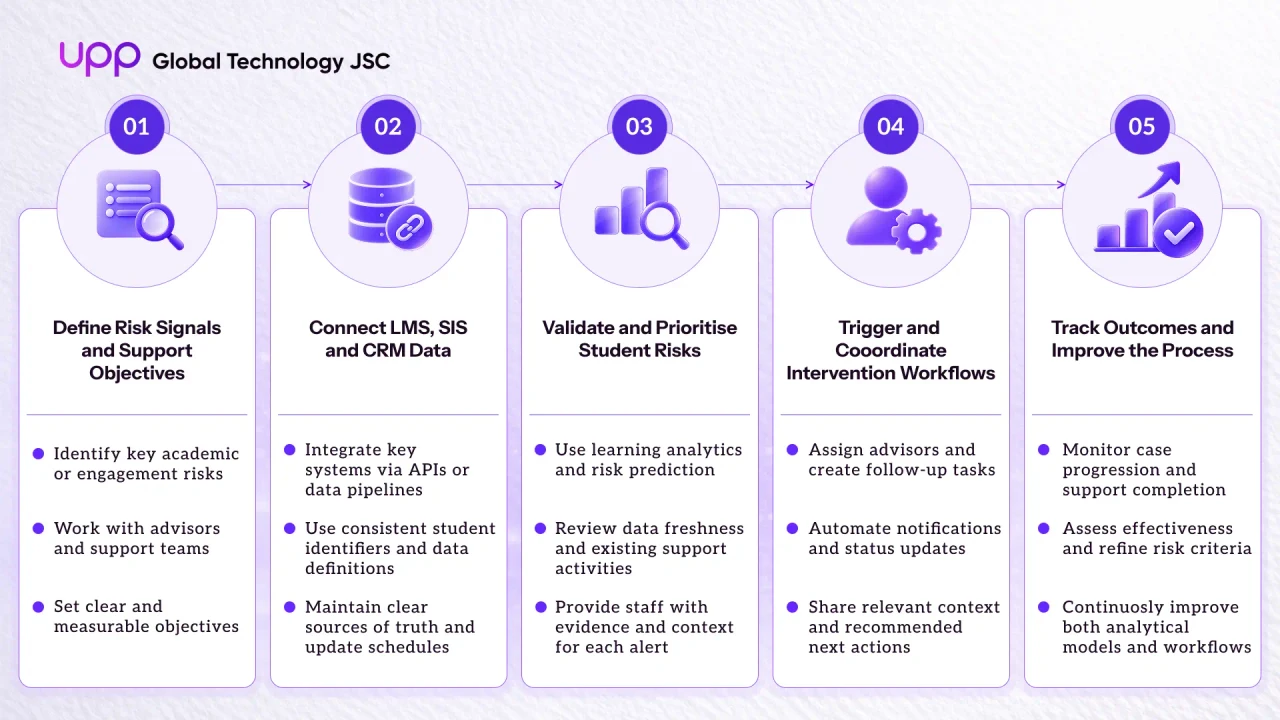
Figure 1. Five-step student data system integration roadmap for timely intervention.
Building effective student intervention workflows requires more than connecting applications or deploying predictive models. Institutions need a structured implementation approach that aligns technical architecture, risk assessment, staff responsibilities, and measurable support outcomes.
The following five-step roadmap outlines how educational institutions can transform disconnected data and risk alerts into a coordinated support process.
Step 1: Define Risk Signals and Support Objectives
Begin by identifying the academic or engagement challenges that require earlier support. These may include repeated missed assessments, declining attendance, prolonged LMS inactivity, or difficulties progressing through a course. Institutions should collaborate with academic advisors and student services teams to determine which indicators warrant review and what assistance is available.
For example, a university may prioritise first-year students experiencing sustained disengagement during their first semester. Rather than measuring success solely through the number of alerts generated, the institution could establish objectives such as reducing the time required to assign an advisor or improving the completion rate of support referrals. Clear objectives ensure that risk detection serves a defined student support need.
Step 2: Connect LMS, SIS, and CRM Data
Once the use case is established, institutions can connect the relevant systems through APIs, event-driven integrations, or governed data pipelines. The objective is to make essential academic records, engagement indicators, and existing support information available within the workflow.
Reliable student data system integration requires consistent student identifiers, agreed data definitions, appropriate update schedules, and clearly assigned sources of truth. For example, the SIS may provide authoritative enrolment information, while the CRM maintains the status of support cases. A well-designed integration architecture should exchange necessary information without duplicating entire student records unnecessarily.
Step 3: Validate and Prioritise Student Risks
Connected academic data can then support rules-based analysis or AI-assisted risk identification. Through learning analytics and student risk prediction, institutions can examine combinations of indicators rather than relying on isolated events. For instance, declining course participation combined with several incomplete assessments may warrant closer attention.
However, not every flagged pattern represents a genuine need for assistance. The workflow should verify data freshness, identify existing support activities, and provide staff with the evidence behind each alert. AI may help summarise relevant context or recommend a review priority, but qualified staff should determine whether further action is appropriate.
Step 4: Trigger and Coordinate Intervention Workflows
Once a concern has been reviewed, the CRM or student support platform can initiate a structured response. This may involve assigning an academic advisor, creating a follow-up task, preparing an outreach message, or referring the student to an appropriate service.
Workflow automation can support case assignment, reminders, status updates, and approved communication drafts. For example, an advisor may receive a case containing relevant course information, the reason for the alert, previous contact history, and a suggested next action. If further assistance is needed, the case can be transferred to another department with clear ownership and an audit trail. This helps ensure that student intervention becomes a coordinated process rather than a series of disconnected notifications.
Step 5: Track Outcomes and Improve the Process
The final step is to evaluate whether support actions have been completed and whether students received appropriate assistance. Institutions should track the progression of each case, including staff review, student contact, responses, referrals, and resolution.
These records create a closed-loop feedback process connecting initial risk signals with actual support activities. If alerts frequently prove irrelevant, institutions can reassess their thresholds or data quality. If referrals remain incomplete despite timely outreach, workflow responsibilities or service capacity may require attention. Continuous monitoring helps institutions improve both their analytical models and their operational processes without assuming that every change in academic performance results from a specific action.
>> Explore UPP's Big Data Analytics services
5. Data Privacy and Human Oversight
Student data system integration across LMS, SIS, and CRM platforms creates responsibilities concerning data privacy, consent, access control, and responsible AI in education. Academic records, learning analytics, and support interactions may contain sensitive student information. Institutions should establish clear purposes for processing these records, determine an appropriate legal basis, and communicate how student data will be used. Consent requirements vary by jurisdiction and processing purpose, so consent should not be treated as the only possible lawful basis for every activity.
For Australian institutions, the Office of the Australian Information Commissioner (OAIC) provides guidance on privacy risks associated with AI products, including the use of personal information for secondary purposes. Practical safeguards should include role-based access permissions, data minimisation, secure API integration, retention policies, and auditable records. These controls should protect student information throughout AI-powered student support workflows rather than being added after implementation.
Human oversight is equally essential for responsible student intervention. AI-generated risk assessments and student risk prediction models should inform professional judgment, not replace decisions made by qualified educators and support staff. Advisors must be able to review supporting evidence, question model recommendations, and select appropriate responses based on individual circumstances. Embedding these principles into operational workflows helps institutions balance timely intervention with student rights and trust.
6. Measuring Intervention Outcomes
Institutions should measure whether risk alerts lead to timely action and effective student support, using the following operational KPIs:
-
Time to intervention: Time between risk detection and the first meaningful support action.
-
Case assignment rate: Percentage of flagged cases assigned to a staff member within the target timeframe.
-
Student response rate: Percentage of contacted students who respond to outreach.
-
Intervention completion rate: Percentage of planned support actions completed, including advising sessions and referrals.
-
Case resolution rate: Percentage of cases closed after the identified concern has been addressed or an appropriate support plan established.
Beyond operational performance, student retention analytics can help assess longer-term outcomes through changes in attendance, assignment completion, academic progression, course completion, and semester-to-semester retention. Institutions should compare these indicators before and after intervention, where appropriate, to evaluate whether support is associated with improved outcomes.
These metrics also help identify workflow gaps. For example, low student response rates may indicate ineffective outreach, while low referral completion may point to delays in service delivery. By connecting risk alerts with intervention records and subsequent academic outcomes, institutions can refine their student intervention workflows and allocate support resources more effectively.
Conclusion
Effective student support requires more than detecting academic risks. Institutions must connect relevant data, establish clear responsibilities, coordinate staff activities, and monitor whether assistance reaches students when it is needed.
Student data system integration enables this transition by linking LMS, SIS, and CRM systems with AI-assisted student intervention workflows. With appropriate governance, human oversight, and continuous evaluation, educational institutions can move beyond isolated alerts toward more timely, coordinated, and accountable student support.
For education leaders, the practical starting point is to select one priority support process, connect the systems it depends on, and establish measurable actions from initial risk detection through to case resolution.
FAQs:
1. What is student data system integration for student intervention?
It connects LMS activity, SIS enrolment data, and CRM support records so an academic risk signal can become a reviewed, assigned, and trackable support case.
2. Why do early warning systems fail to produce timely support?
Alerts may remain in dashboards without a case owner, shared student context, or escalation rules. Staff also need to check whether another team is already providing support.
3. What are the five steps for implementing a student intervention workflow?
Define risk signals and support goals; connect LMS, SIS, and CRM data; validate and prioritise risks; assign and coordinate support; and track outcomes to improve the process.
4. How should institutions manage AI risk predictions and student privacy?
Use accurate, purpose-limited data, appropriate access controls, and a lawful basis for processing. Qualified staff should review AI-assisted risk assessments and retain responsibility for support decisions.
5. Which KPIs show whether student intervention is effective?
Track time to intervention, case assignment, student response, support completion, and case resolution. Review subsequent engagement, academic progression, and retention separately; these outcomes alone do not prove the intervention caused improvement.
Tags cloud
Newsletter
DISCOVER MORE


































































LET’S TALK...
Content delivered to your inbox


ENTER YOUR EMAIL
YOU WANT TO...


Hanoi, Vietnam
Web3 Tower, No. 15, Alley 4, Duy Tan, Cau Giay, Hanoi, Vietnam