What Data Pipelines do LLM systems actually need?
Date
January 7th, 2026
Reading Time
7 mins
Tags cloud
What's news
Abstract
As Large Language Models (LLMs) move from experimentation to production, system reliability increasingly depends on the design of data pipelines rather than model capability. While current discussions often emphasize model architecture, prompt engineering, and vector databases, these components alone are insufficient to ensure consistency, correctness, and operational trust. This paper examines the data pipeline requirements that underpin production grade LLM systems, focusing on data contracts, ingestion stability, chunking strategies, and feedback loops. By analyzing how each pipeline layer influences model behavior and reasoning, the discussion highlights why usable, governed, and semantically stable data pipelines are essential for scalable and trustworthy LLM deployments.
Inside the Data Pipelines behind production LLM systems
As LLM adoption accelerates, much of the conversation continues to revolve around models, prompts, and vector databases. These components are visible, measurable, and easy to compare. However, once LLM systems move into real production environments, their limitations rarely originate at the model layer. Instead, issues surface within the data pipelines that feed, constrain, and contextualize the model.
This blog shifts the focus away from models and toward data pipelines. Rather than treating pipelines as background infrastructure, they are examined as the primary mechanism that determines how LLMs reason, retrieve information, and produce outputs that can be trusted over time.
1. The real question is not Data Volume, but Data Contract
1.1 Why more data does not automatically improve LLM outputs
A common assumption in early LLM projects is that exposing more internal data will naturally lead to better answers. Enterprise environments, however, rarely offer clean and unified datasets. Policies are duplicated across teams, documentation evolves without clear deprecation, and operational data reflects different interpretations of the same rules. When all of this information is indexed together, retrieval systems lose the ability to distinguish signal from noise.
As a result, LLMs produce answers that are fluent but operationally incorrect. The model combines partially relevant context into responses that appear coherent yet fail when applied. This failure mode is subtle because the system does not break visibly; it simply becomes unreliable over time.
1.2 Data Contracts as a control mechanism
A data contract introduces intentional constraints into the pipeline. Instead of asking how much data should be indexed, the pipeline defines what the model is allowed to know for a given category of questions. Ownership, scope, semantic intent, and update expectations are explicitly stated for each data source.
With contracts in place, retrieval becomes more deterministic. The system no longer treats all documents as an equally valid context. Accuracy improves not because more data is added, but because ambiguity is removed before the model is ever invoked.
2. Ingestion Pipelines are about semantic stability, not speed
2.1 Why traditional ETL patterns break LLM systems
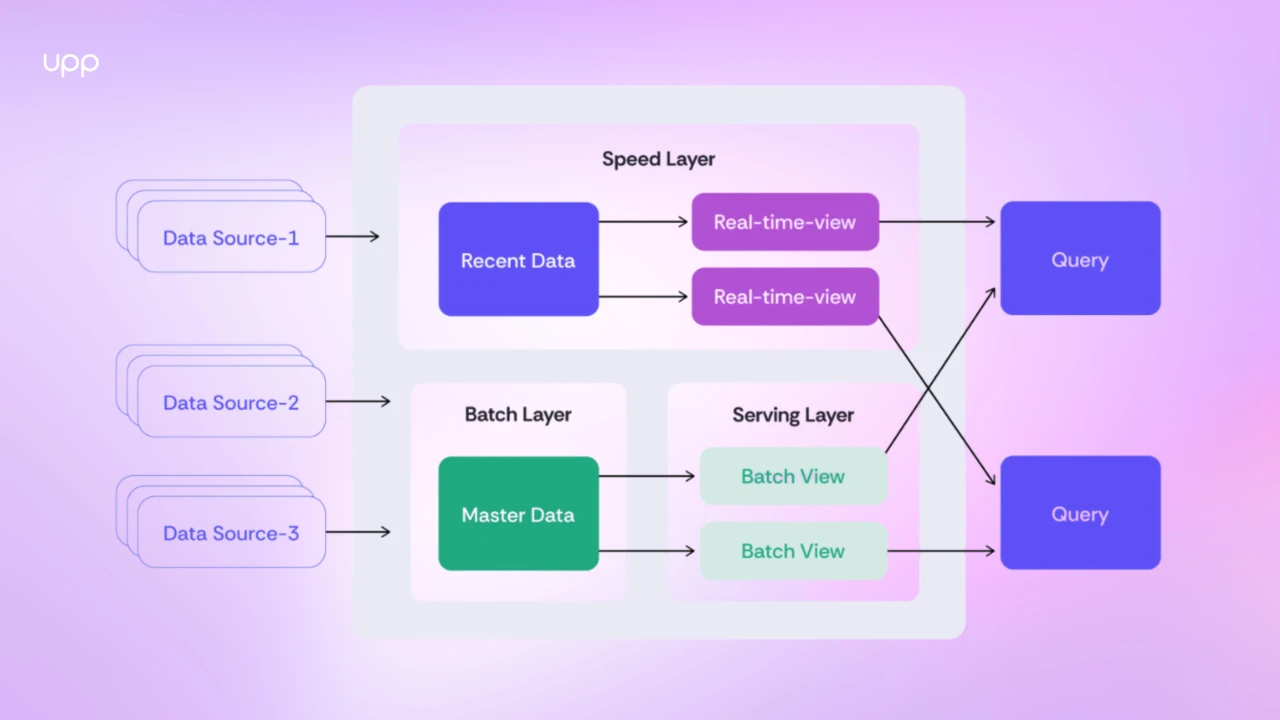
Traditional ingestion pipelines are designed to maximize throughput and completeness. For LLM systems, this approach often introduces instability. Minor changes such as formatting updates or reordered sections can trigger full re-ingestion and re-embedding cycles. Over time, vector stores accumulate multiple near-identical representations of the same content.
This accumulation creates retrieval of conflicts. Semantically similar chunks compete for relevance, increasing variance in model responses. The issue is not freshness, but uncontrolled semantic churn introduced by ingestion processes that lack contextual awareness.
2.2 Designing for semantic stability
Effective ingestion pipelines for LLM systems prioritize semantic stability. Change detection mechanisms must determine whether an update meaningfully alters content or simply modifies presentation. Version lineage becomes critical, allowing the pipeline to track how documents evolve and which representations should remain active.
By treating documents as evolving entities rather than static files, ingestion pipelines preserve continuity. Retrieval systems can then operate on stable semantic representations rather than constantly shifting embeddings.
3. Chunking defines how the model reasons
Chunking is often implemented as a preprocessing step, yet it encodes assumptions about how the model should reason. Small chunks favor compositional reasoning across multiple retrievals, while larger chunks emphasize local coherence at the cost of precision. Each strategy implicitly shapes the model’s reasoning path.
When chunking ignores logical structure, retrieved context becomes shallow. The model compensates by generating connective reasoning that may not be grounded in the source material. What is often labeled as hallucination is, in many cases, the result of insufficient contextual coherence introduced upstream.
Chunking is often implemented as a preprocessing step, yet it encodes assumptions about how the model should reason. Small chunks favor compositional reasoning across multiple retrievals, while larger chunks emphasize local coherence at the cost of precision. Each strategy implicitly shapes the model’s reasoning path.
When chunking ignores logical structure, retrieved context becomes shallow. The model compensates by generating connective reasoning that may not be grounded in the source material. What is often labeled as hallucination is, in many cases, the result of insufficient
4. Retrieval pipelines shape trust more than models
4.1 Why high recall is a liability
Many retrieval systems are optimized to always return results. In LLM pipelines, this design choice is risky. Low confidence retrievals provide an incomplete context that the model confidently completes, producing plausible but incorrect answers.
Introducing relevance thresholds fundamentally changes system behavior. When retrieval of confidence is low, the system must be allowed to abstain or request clarification. This shift prioritizes correctness over coverage and leads to more predictable failure modes.
4.2 Temporal consistency as a retrieval constraint
Retrieval pipelines must also enforce temporal consistency. Mixing information from different points in time produces answers that are technically accurate but practically invalid. Temporal metadata allows retrieval to align context to a single version of truth.
This constraint becomes critical in environments where rules, pricing, or policies change frequently. Without temporal alignment, trust in the system erodes quickly.
5. Feedback pipelines are the only learning mechanism
LLMs do not improve through usage alone. In production, models remain static, and improvement emerges from changes in data curation, logic, and prompting strategies. Feedback pipelines capture signals such as incorrect answers, user dissatisfaction, and retrieval failures, transforming them into structured data.
Over time, this feedback reshapes the pipeline itself. Weak documents are restructured, chunking strategies are refined, and retrieval constraints are adjusted. Learning occurs at the system level rather than inside the model, enabling gradual alignment with usage patterns.
Conclusion
LLM systems succeed or fail at the data pipeline level. Contracts, ingestion strategies, chunking logic, retrieval discipline, and feedback loops collectively define whether an LLM system is reliable in production. When these elements are designed intentionally, LLMs transition from experimental tools into predictable and governable components of enterprise architecture.
Tags cloud
Newsletter
DISCOVER MORE




































































![[Recap] UPP Global Technology JSC Establishing Anniversary](/homepage/news-section/new-4.webp)






































LET’S TALK...
Content delivered to your inbox


ENTER YOUR EMAIL
YOU WANT TO...


Hanoi, Vietnam
Web3 Tower, No. 15, Alley 4, Duy Tan, Cau Giay, Hanoi, Vietnam